Vendor Risk
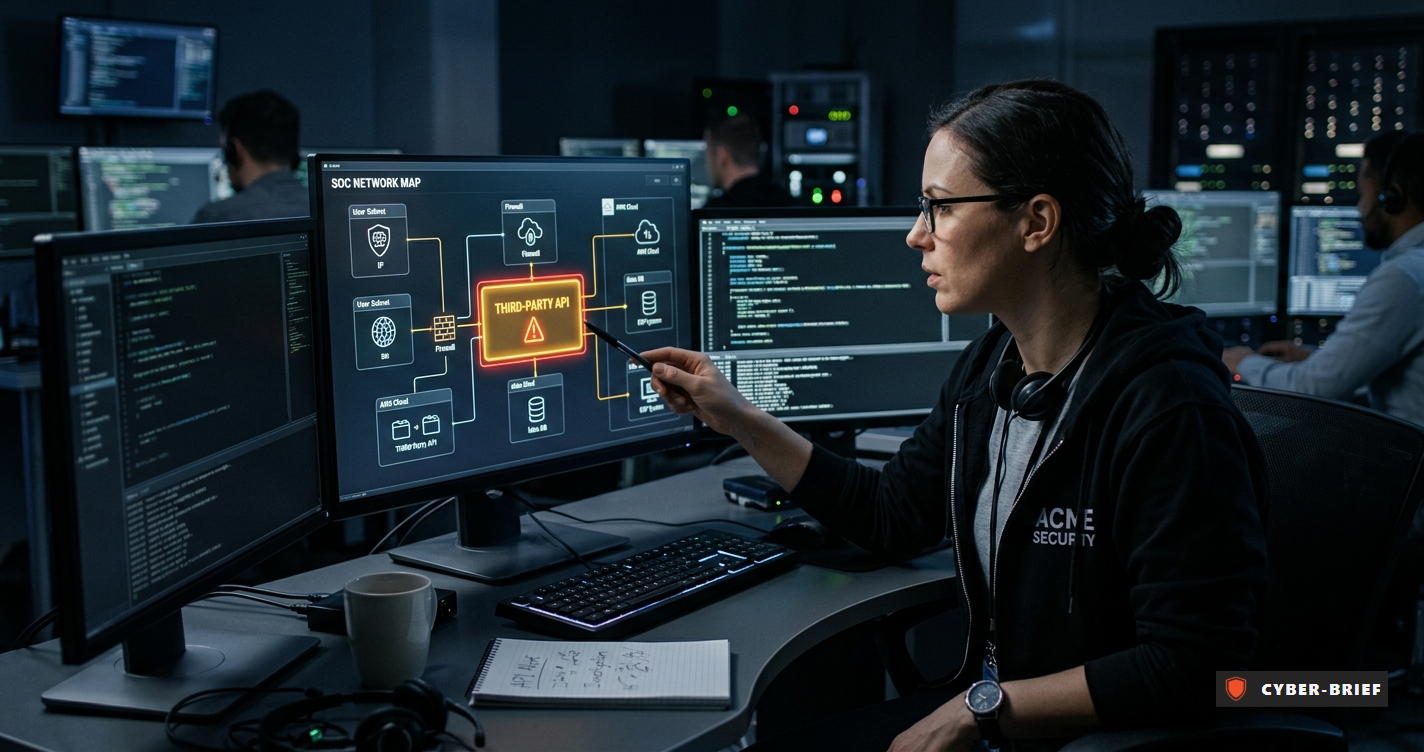
The Weakest Link
Before you read this, can you answer these three questions about your vendors?
- If one of your fintech partners was breached last night, would you know before your customers do?
- Do you know which AI model is actually running inside the compliance tool you deployed last quarter?
- When did you last look beyond your vendor's SOC 2—at who your vendor's vendors are?
If any of those questions gave you pause, you're not alone — and you're not safe.
In 2026, the most dangerous entry point into your institution isn't a zero-day exploit. It's a vendor invoice you approved six months ago.
In January 2026, Volvo Group North America discovered 17,000 employees were caught in a breach originating at Conduent, a third-party provider. Hackers had been inside Conduent's environment since October 2024. Volvo found out two months later, via vendor notification.
The breach ultimately touched more than 25 million people across Blue Cross Blue Shield branches and government agencies. The institution didn't fail because its own defenses were weak. It failed because someone else's were.
The SOC 2 Illusion
When it comes to fintech partners, most risk teams reach for the same answer: the SOC 2 (System and Organization Controls 2) report. It has become the de facto currency of vendor due diligence — a document that signals trustworthiness, satisfies auditors, and gets filed in a shared drive before an onboarding call.
The problem is that SOC 2 was built for a simpler era—a world that no longer exists now that vendor relationships involve AI models capable of changing behavior after a single update.
Consider a typical scenario: a risk manager spends months building a watertight vendor program with a SOC 2 on every partner, completed questionnaires, and annual reviews delivered on schedule. Then, a payment processor is compromised through a subcontractor that was never disclosed. This is how most third-party breaches actually unfold—not through a vendor you scrutinized, but through a subcontractor you never knew existed.
A SOC 2 is a point-in-time snapshot. It tells you nothing about what happened last month. Treat SOC 2 as a floor, not a ceiling. Real due diligence means constantly watching your vendors and using contracts that force them to report security changes immediately.
The Fourth-Party Blind Spot
When you onboard a vendor, you're accepting exposure to their entire supply chain. The risk runs deeper than most programs account for—and AI has made it structural.
A bank evaluates a customer service platform in January. By March, the foundation model powering that platform had been updated without their knowledge. The bank's evaluation is now stale.
The people running these programs aren't careless— they're under-resourced and working with frameworks that haven't kept pace with how the vendor ecosystem actually operates today. The fourth-party blind spot isn't a failure of attention. It's a failure of architecture.
What Regulators Are Watching
FINRA's 2026 Regulatory Oversight Report directs firms to maintain inventories of all vendor-provided systems and evaluate risks posed by fourth-party providers.
DORA, in force since January 2025, mandates continuous information and communications technology (ICT) risk management, including requirements for third-party risk management and vendor monitoring.
The message from every regulator is the same: you own the risk, regardless of where it originates. A breach at a fourth-party subcontractor flows downstream — to you.
Five Things That Actually Work
-
1. Risk-tier your vendor inventory
Not every SaaS tool deserves the same scrutiny as your payment processor. Focus continuous monitoring where the blast radius is largest—data access, geography, and automation exposure.
2. Move beyond questionnaires
Self-reported security posture is the vendor's best version of the truth. External attack surface monitoring and continuous security ratings give you a version they didn't curate.
3. Map the fourth party
Require critical vendors to disclose subcontractors and notify you when relationships change. Include fourth-party review in monthly risk dashboards.
4. Write contracts that govern
Secure breach notification measured in hours, not days. Establish forensic access rights before an incident occurs, and mandate immediate disclosure when internal AI models change. Managed service agreements should be governance tools, not just SLAs.
5. Run tabletops with vendors in the room
You don't want to discover your vendor's notification process during an actual breach. Surface coordination failures in drills — before they matter.
Takeaways
Don't wait for a live breach to test a vendor's incident response. Flush out the coordination failures in drills—while the stakes are low. The takeaway from Volvo isn't that vendor management is broken, but that the threat landscape has outgrown our definitions.
The organizations winning this fight treat risk as a living, continuous posture. They manage actual exposure, not paperwork. That's a difficult standard to build, but it is the only one that works.
Citations & Reference Links:
1. The Volvo Group / Accellion Supply Chain Breach The Story: Hackers targeted Accellion's legacy File Transfer Appliance (FTA), creating a cascading supply chain breach affecting downstream enterprise customers. Volvo Group formally confirmed that a subset of their data was accessed via this third-party vendor vulnerability. Verified Sources: * Reuters: "Volvo Cars says research data stolen in cyberattack" SecurityWeek: "Volvo Group Discovers Data Breach Via Compromised Third-Party Vendor Storage"
2. FINRA Vendor and Fourth-Party Mandates The Story: FINRA's regulatory oversight frameworks emphasize that outsourcing activities to vendors does not relieve a firm of its compliance responsibilities. Firms must maintain inventory controls and oversee sub-vendors (fourth parties). Verified Source: * FINRA Regulatory Oversight: FINRA Books & Records / Outsourced Technology Providers Guidance [Link]
3. DORA (Digital Operational Resilience Act) Compliance The Story: Entered into full legislative force to standardize how the financial sector manages ICT (Information and Communication Technology) third-party risk, requiring continuous monitoring and strict multi-layered vendor oversight. Verified Source: * European Banking Authority: DORA Chapter V: Management of ICT Third-Party Risk